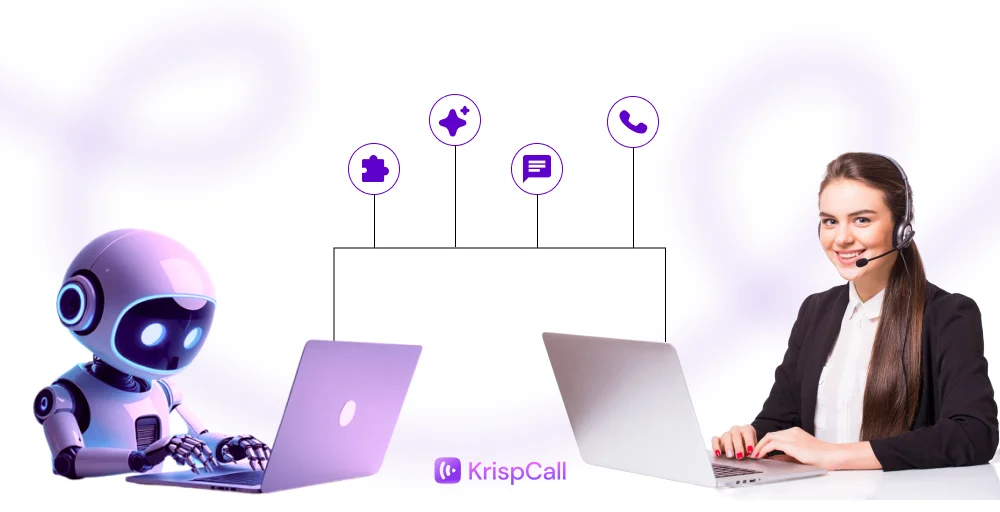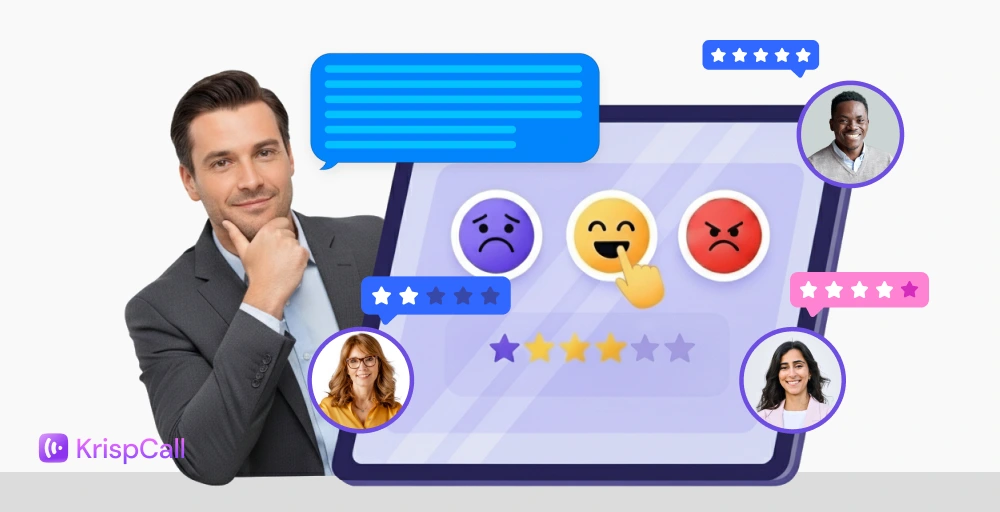



Customer service in 2026 is no longer about just solving problems. It’s also about creating experiences that leave a lasting impression. Customers’ expectations are higher than ever. They want immediate responses, personalized interactions, proactive assistance, and a seamless experience across every touchpoint.
And for businesses of all sizes (small businesses to large enterprises), understanding and meeting customers’ service expectations are critical as they not only strengthen relationships but also foster long-term loyalty.
In this blog, we’ll dive deep into the key expectations customers have today, why they matter, the different types of expectations, and actionable tips to help your business deliver exceptional service.
✨ Key Takeaways
- Customer expectations definition refers to the level of service or experience that customers expect from your business.
- Meeting customers’ expectations is important for gaining their trust, fostering stronger relationships, improving retention rate, and driving business growth.
- Some of the common customer service expectation examples include active listening, fast response, effective resolution, personalized interaction, transparency, proactive support, and consistency.
- To meet and maintain consumers’ expectations, you have to understand and anticipate their needs, act on their feedback, use AI tools for efficiency, and maintain consistency with skilled staff.
What are customer expectations?
Customer expectations are the level of experience or service standards that customers expect from a business. Essentially, it is how customers envision the interaction with your business across all touchpoints. These expectations often stem from prior experience, market influence, brand impressions, word-of-mouth, etc.

Traditionally, customer expectations were limited to good service quality and reasonable pricing. But with the growing competitive market and limitless options, their expectations have skyrocketed. Nowadays, customers prefer businesses that go above and beyond, offering proactive services and a personalized experience.
Why is customer service expectation important?
Meeting customers’ expectations has become as important as delivering high-quality products or services. In fact, with so many competitors, many businesses’ success dwells on exceeding the customer’s expectations.
Studies suggest that 93% of consumers prefer spending more and repeating purchases with companies that meet customer service expectations. On the flip side, 80% of consumers are more likely to switch companies if they’ve faced multiple bad experiences.
Understanding and meeting customer expectations is crucial for building stronger relationships with your customers. Not only does it improve the satisfaction rate, but it also helps to turn one-time buyers into loyal customers. This also means more positive advocates for your company, helping to enhance your brand’s reputation.
10 common customer service expectations
When it comes to customer service, there are a few standards that customers expect from every business nowadays. Meeting or exceeding them is quite essential for keeping your customers satisfied and loyal.
Here are the 10 most common customer service expectations.
1. Being listened to
Many customers have the impression that companies do not listen to feedback. They have this perception that most companies fail to reflect the feedback into any visible changes.

Moreover, companies that do take the initiative to collect feedback often fail to communicate back to their customer about the changes and improvements. This makes the customer feel like their voices are ignored and undervalued.
Forbes even reported that 72% of customers never hear back from a company after providing feedback. 71% of customers believe that their feedback won’t ever equate to any meaningful changes. This further highlights how customer opinions are falling on deaf ears.
To ensure that customers are being heard, it is essential for you to hear your customers out and act on their feedback. Likewise, you also need to let them know that their voices are being heard and improvements are being made. These small gestures inform the customers that their expectations are being met.
2. Timely responses
It’s frustrating to have a problem that’s affecting your daily workflow, but not being able to reach the support team for proper guidance makes it even worse. Nowadays, customers have little patience, and they almost always expect businesses to handle their requests with urgency.
Oftentimes, fast responses are the deciding factor between satisfied/loyal customers and increased frustrations/churn rates. To ensure your business can deliver timely responses, it is essential to train your agents and equip them with the necessary tools. e.g., AI-powered contact center software featuring VoIP (Voice over Internet Protocol), ACD (Automatic Call Distribution), IVRs (Interactive Voice Response), etc.
However, ensure that prioritizing response speed does not come at the expense of service quality.
3. Efficient problem resolution
Although quick response times are essential for business, they fall flat without accurate problem resolutions. Meaning, it’s not just about how fast a company responds, but also about how efficiently they can resolve the customer issues. This aspect is critical for businesses as it directly affects customers’ expectations and loyalty.
Fast reaction time with effective problem resolution shows the customer that the company cares about them, understands their frustrations, and is committed to serving them. This helps to mitigate the negative impact of the issue, improves the brand’s reputation, and also customer retention rate.
To deliver quick problems, there are a few key things that you must assess. First, ensure that the knowledge base is accurate and updated for better self-service options. Secondly, support agents should have the proper skillset and soft skills to effectively tackle customer issues.
Finally, utilize customer service software to automate routine tasks, get better insights, and make customer support more efficient. The quicker and efficient you are at resolving customer issues, the better your chances are at exceeding their expectations.
4. Clarity and transparency
Honesty and transparency are key to strengthening the relationship with your customers. Keeping communication open and transparent helps to build trust, boost credibility, and create a positive impression of your brand.
Businesses that are open about their mistakes are more trustworthy than those that lie and pretend. Moreover, when customers believe in your brand and deem it reliable, they are more willing to forgive the shortcomings. A Qualtrics report stated that about 75% of consumers who had positive experiences with a company are inclined to forgive them for a few bad experiences.
To maintain transparency with your customers, it is crucial to openly communicate about your successes and shortcomings. You should be upfront about mistakes, state how you’re planning to resolve them, and offer compensation for the inconvenience. This puts your company in a very strong position for winning the customer’s trust and gaining their loyalty.
5. Personalized interactions
Customer care personalization has become one of the most common expectations that customers have from a business. According to McKinsey research, more than two-thirds of consumers expect a personalized experience from companies, and 76% feel disappointed when they fail.
The demand for tailored interaction has gone up due to the oversaturated business market, rising competition, and higher industry standards. Between two businesses offering similar products or services, customers will likely prefer the one that offers personalized service.
Therefore, it’s essential to utilize relevant customer data and use it to personalize their experience. For this, businesses can use various customer service tools such as CRM software, analytics tools, and a service desk
6. Skilled and reliable support
Unskilled support agents are detrimental to customer service as their inability to provide proper solutions shows incompetence and false promises. On top of that, agents with poor communication skills can also negatively impact the customer’s experience, degrading their trust and hurting the brand’s reputation.
But knowledgeable agents with proper soft skills can handle even the complex issues with efficiency. They can use their expertise to offer problem resolutions and lessen the customer’s frustration with empathy and compassion. Their competence directly affects how customers perceive your business.
To ensure your support agents are capable, it’s essential to hire skilled workers, conduct training programs to enhance their product knowledge, and run customer interaction simulations to boost their confidence and communication skills.
7. Omnichannel support
There are various communication channels that customers use to contact the support team, such as phone calls, video calls, live chats, emails, forums, etc. Some might reach out via email, but might need to escalate to video calls for proper resolution. In this scenario, switching channels can often be frustrating as they need to repeat the same information.

This is why most people expect businesses to support omnichannel communication. It integrates multiple communication channels in a single platform, making communication seamless for the customers. They can easily use their preferred channel and switch as needed without losing the context of the conversation. As a result, this improves customer experience and the customer satisfaction rate.
But before implementing an omnichannel customer service strategy, it is important to understand the target audience demographics. Customers have different channel preferences depending on the age group. Moreover, training agents to handle queries across different platforms is also essential for effective and consistent service.
8. Proactive updates
With proactive customer service and updates, businesses can set themself apart from the competitors and exceed expectations. It involves using relevant customer data to find the common problem or needs and addressing them proactively rather than waiting for the customer to reach out.
For instance, a follow-up call after a purchase that guides the user on how to use the product. A follow-up message about their issues being addressed or resolved. Preemptive information about service being temporarily unavailable and offering compensation for the inconvenience. These small gestures can help to strengthen customer relationships and make them feel valued.
9. Consistency across interactions
Consistent service means providing the same high-quality and reliable support across different touchpoints throughout the customer journey. It ensures that customer expectations are met every time they interact with your brand.
With consistency, you can build trust and loyalty with the customer as well as improve the brand’s overall reputation. To ensure your business delivers the same service quality and experience every time, you need to set service standards or benchmarks, use the right tools and technologies, and train your agents to prioritize service quality.
10. Data privacy and security
As customers entrust businesses to handle their information, they expect them to keep it safe. If businesses do not have proper security measures, they leave themselves vulnerable to cyberattacks and breaches. This could potentially harm the trust and reputation and can be subject to legal consequences.
To ensure the safety of customer data, businesses should use strong security protocols, adhere to data protection compliance, and follow best practices. Moreover, being transparent about what data is being collected, why it’s needed, and how it will be used helps to win their trust and exceed expectations.
Types of customer expectations
There are multiple types of customer expectations based on various factors such as past experience, brand impressions, and marketing trends. Learning about them helps to understand the customer needs and deliver better service.
- Explicit: Explicit expectations are what the customers need or expect from your business. For instance, they often involve the features and pricing of a product promised by the company.
- Implicit: They are the untold assumptions that customers often have about your business. These types of expectations are highly influenced by what the customer knows about the industry standards or common practices.
- Interpersonal: Interpersonal expectation comes from when the customer interacts with your business. More specifically, when they interact with your team members, whether it is in person or by phone call, live chat, emails, etc.
- Digital: Digital expectation involves how your business handles online or digital customer interactions. This can include the company’s website, mobile application, social media channels, emails, and even real-time chatbots.
- Performance over time: This type of expectation covers how the business handles customers’ ever-changing needs over time. Dynamic expectations are influenced by evolving technologies and emerging trends.
Only by catering to the different types of customer expectations can businesses be successful and stay relevant in the future.
Tips on maintaining customer expectations
To ensure that you meet customer expectations, here are a few key strategies to keep in mind. It involves understanding your customers, anticipating their needs, using their feedback, utilizing AI tools, and maintaining consistency.
Let’s take a quick look at the key strategies in detail
1. Understand your customers
Understanding your customer is key to anticipating their needs, managing expectations, and fostering loyalty. And there are multiple ways to get insight about your customers. E.g., you can gather feedback, host surveys, engage through social media, conduct market research, use relevant data, and analyze their behavior.
2. Use AI-powered tools
AI-powered tools can play a major role in maintaining customer expectations. For instance, an AI chatbot can offer personalized 24/7 customer support. They can predict and anticipate customer needs, automate routine tasks, and give data-driven suggestions to human agents to boost their productivity.
3. Anticipate customer needs
Predicting customer needs and fulfilling them before they reach out is one of the most effective ways to exceed expectations. But for that, you’ll need to understand your customer better. Listen actively during interaction, analyze feedback, and utilize data-driven insight to get a complete idea of your customer and anticipate their needs better.
4. Act on feedback
Acting on customer feedback shows that you value your customers and their opinions. Being open-minded while listening to feedback and communicating back after implementing those changes helps to meet their expectations.
5. Maintain consistency
Maintaining consistent customer service means making sure interactions across all touchpoints deliver the same level of satisfaction. This consistency builds trust and makes your customer feel more confident in your brand. Over time, this also helps to improve customer loyalty.
How KrispCall helps businesses meet customer service expectations
With KrispCall, you can enhance your customer service standards and exceed expectations. Its reliable cloud telephony and advanced telephony tools can help teams to respond quickly, resolve issues faster, and keep interactions consistent.
Plus, the wide range of CRM integration support helps to bring all your customer data in a single place, making it much easier to understand your customers and deliver a personalized experience. With multiple useful tools combined with a robust data security system, KrispCall not only helps to improve interaction efficiency but also builds lasting relationships with your customers.
Ready to get started? Get your virtual number today and explore everything KrispCall offers to improve customer service! Or schedule a demo to see it all in action.
Frequently Asked Questions
How do you identify customer expectations?
- Analyze customer data.
- Conduct surveys and gather feedback.
- Monitor customer interaction and determine the emotions.
- Analyze the target customer demographics and market trends.
- Social media listening.