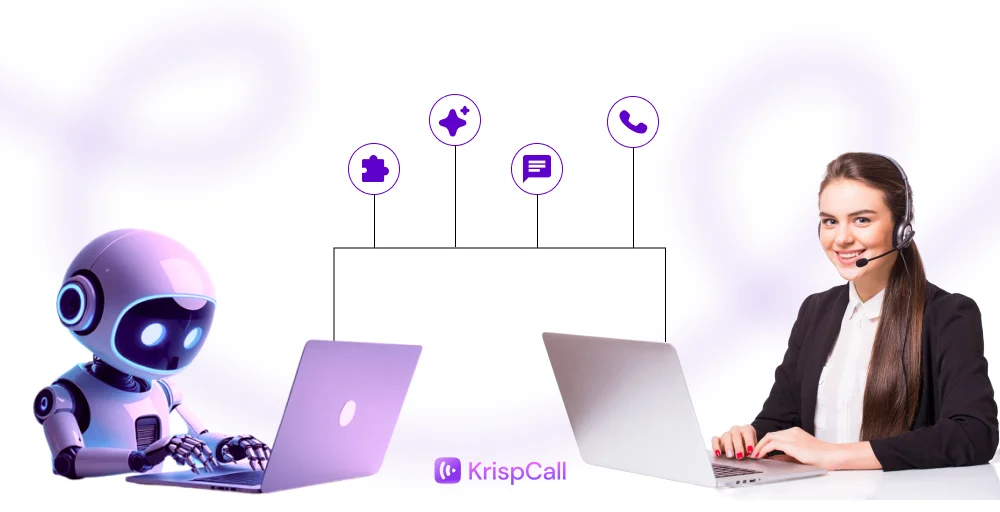



Customers expect a fast, smooth, and personalized experience. Slow responses and siloed interactions lead to frustrations and lost loyalty. That’s why customer experience (CX) technology is important for providing exceptional customer service at every touchpoint.
CX tools, such as AI-powered chatbots and voice assistants, instantly resolve customer queries. Data analytics platforms provide valuable insights into the customer journey. These tools help companies to identify their issues and make improvements for greater service.
This blog will examine the top 10 customer experience technologies, their implementation, and the primary challenges associated with adopting digital CX technology.
What is CX technology?
Customer experience (CX) technology is a software that enables businesses to manage, monitor, and improve every customer interaction efficiently. The primary purpose of this technology is to deliver smooth and personalized interactions, thereby enhancing the overall customer journey.
By collecting and analyzing data on customer behavior, preferences, and interactions, cx technologies help businesses anticipate needs, provide timely support, and deliver personalized recommendations.
How customer experience technology improves the customer journey
Here’s how customer experiences technology enhances the customer journey:
- Unified customer data: This technology enables the collection of information about customers from various sources, including websites, CRM systems, social media, and contact centers.
- Enables omnichannel support: It allows customers to switch between channels, such as chat, email, phone, and social media, without losing context. This ensures seamless and consistent communications.
- Delivers personalization at scale: Businesses can leverage tools like chatbots and predictive analytics to provide tailored experiences for each customer. This boosts satisfaction and strengthens customer loyalty.
- Provides real-time insights and automation: Tools like voice analytics, sentiment analytics, and automated workflow to monitor interactions in real-time, identify customer pain points, and trigger automated workflows. This helps businesses resolve issues more quickly, reduce wait times, and proactively enhance the customer experience.
Benefits of customer experience technology
Customer experience technology offers numerous benefits, including enhancing customer experience, facilitating strategic decision-making, and increasing agent productivity.
- Improved customer experience: With reduced response times and personalized support, CX tools enhance the overall customer experience. It improves customer satisfaction and builds loyalty.
- Data-driven decision making: The tools collect valuable insights from Voice of Customer data, including their preferences, behavior, and needs. This information enables companies to make effective decisions regarding product development and marketing strategies.
- Increased agent productivity: Customer experience technology automates repetitive tasks like data entry and call routing, allowing agents to focus on more complex issues. With quick access to unified customer information, agents can resolve queries faster and deliver better service.
- Operational efficiency and cost savings: Using cloud communication and CX software reduces operational costs by eliminating the need for extra manpower while improving service quality. Companies can handle more customer interactions with fewer resources, resulting in higher efficiency.
- Better customer retention: When customers receive quick, personalized, and consistent support from the company, they tend to remain loyal towards the brand. This creates trust, enhances engagement, and lowers churn rates.
10 key customer experience technologies in 2025
Customer experience technologies create seamless and highly personalized interactions that strengthen the relationship.
Here are the ten most impactful CX technologies leading the way.
1. AI chatbots & virtual assistants
AI chatbots and virtual assistants use natural language processing (NLP) to interact with customers. These tools help to understand the customers’ intent and deliver accurate and prompt resolutions.

Adopting AI chatbots and virtual assistants focuses on automating repetitive tasks, such as scheduling appointments, interacting with customers based on their previous chat history, and recommending products. This reduces the human involvement, allowing a human agent to prioritize sensitive and emotional issues.
2. Self-service portals
Self-service technology empowers customers to address their own issues independently, allowing them control over their experience. Sophisticated portals offer searchable knowledge bases, interactive guides that reduce wait times, and empower users.
This approach minimizes dependency on live agents. They only have to focus on resolving complex queries.
Businesses that implement robust self-service portals see measurable gains in efficiency, reduced support costs, and greater customer loyalty.
3. Real-time support tools
When something goes wrong, no customers like to wait for an hour to solve the problem. Real-time support tools like live chat, AI-powered chatbots, and unified communication platforms that integrate chat, email, and social media ensure customers’ issues are immediately resolved.
Providing instant assistance builds trust and confidence in the brand, as customers understand help is available whenever needed.
Companies using real-time support report higher customer satisfaction and retention rates. Proactive engagement transforms potentially negative experiences into positive ones.
4. Omnichannel support
Omnichannel platforms offer seamless, consistent, and high-quality customer experiences across multiple channels like email, phone, and social media. They make it easy for customers to engage effortlessly and efficiently just by switching between channels.

For example, a customer can start a conversation with a brand on live chat, continue it through email, and later resolve the issue over a phone call without needing to repeat their information or context. This creates a smooth and frustration-free experience that strengthens customer trust and satisfaction.
5. Customer journey mapping
Customer journey mapping illustrates how customers interact with a brand, from the initial encounter to the post-purchase experience. They focus on customers’ experiences instead of sales or transactions. It helps the team identify pain points, gaps, and opportunities for improvement.
By understanding the journey, businesses can design experiences that feel seamless, thoughtful, and aligned with customer expectations. Effective mapping strengthens relationships, improves satisfaction, and ensures every touchpoint contributes to loyalty and trust.
6. Feedback collection and analysis
Structured feedback systems collect customers’ experiences through surveys, online review websites, and social media platforms. This data helps companies understand what’s going well and what areas need improvement. Analyzing feedback enables companies to adjust their strategies and optimize processes proactively.
7. Predictive analytics
Predictive analytics utilizes advanced AI and machine learning algorithms to analyze large volumes of historical data. It identifies patterns and trends to forecast future customer needs, behaviors, and potential issues with high accuracy.
This proactive approach enables businesses to address customer concerns before they emerge, optimize resource allocation, personalize marketing strategies, and improve overall customer satisfaction and retention.
Additionally, predictive analytics can be integrated with other data sources and technologies to enhance decision-making processes and stay ahead of competitors.
8. CRM integrations
Integrating CX technology with your CRM gives your team a complete view of each customer in a unified, single platform. Every interaction, purchase, and past issue is easy to access, enabling agents to provide faster, smarter, and more personalized service.

This means no repeated questions, quicker solutions, and personalized experiences for customers. It makes every interaction feel effortless and thoughtful. This integration reduces repetitive questions, accelerates problem resolution, and allows teams to anticipate customer needs.
Companies that integrate CX tools with CRM experience higher satisfaction scores, smoother interactions, and deeper customer trust.
9. IoT-connected support
Bringing CX technology together with IoT devices opens up entirely new ways to understand and serve customers. With IoT, businesses can use real-time data from connected devices like smart home gadgets, wearables, appliances, or even industrial machines, to spot issues before customers even notice them.
This means faster fixes, smarter self-service options, and better support experiences, all while helping customers feel cared for and building stronger trust.
10. Training and Development Platforms
Enhancing CX technology supports ongoing training and development opportunities that boost productivity. Well-trained teams are more confident, proficient, and consistent, leading to better customer experiences.
These teams resolve issues more effectively and empathetically, delivering superior service. Organizations that invest in training platforms see increased agent productivity, higher satisfaction levels, and greater customer loyalty, highlighting the importance of skilled employees in delivering exceptional CX.
How to implement CX technologies
Several factors must be considered to implement technologies effectively. Some of the factors are explained below:
1. Recognize customers’ preferences: Before implementing technologies, it is essential to recognize customers’ needs and their desires. To collect these data, conduct customer research through feedback, interviews, and surveys. This enhances customer satisfaction and addresses genuine issues.
2. Define clear goals: Every business has its own goals to achieve. Make sure that the goals you have planned are measurable, time-bound, and achievable. This helps to avoid unnecessary operational costs and focus on the right track.
3. Choose the right tools: Pick the suitable technology and tools that strongly align with your goals and objectives. Consider implementing agentic AI for business solutions that can automate complex workflows. Additionally, when selecting tools, ensure that they are user-friendly, cost-effective, and offer good customer support.
4. Provide training facilities: Create training classes for teams and provide them with complete guidelines to handle tools. Ensure that team members are confident in using the technology to increase productivity and effectiveness.
5. Prioritize data security: Customers’ data should be kept safe and protected to build trust with them. Therefore, choose tools that offer strong encryption, multi-factor authentication, and compliance with data protection regulations.
6. Measure and optimize: Track the performance of technology using various key performance indicators like customer satisfaction score (CSAT), average handle time, and first resolution time. If any mistakes happen, find alternative solution tools or adjust the tool settings.
7. Collect feedback regularly: Consistently gather input from team members and customers to identify new opportunities. This practice also supports continuous improvement and updates, ensuring the delivery of quality services.
Key challenges in adopting CX technology
Here are the key challenges in adopting CX technology:
- High implementation costs: Adopting CX technology requires a significant investment to install and integrate the tools. This might be a burden for small and mid-sized businesses.
- Complex system integration: Businesses often struggle to integrate new CX technology with their existing CRM or communication systems. This challenge can lead to delays in deployment and increased costs.
- Data privacy and compliance issues: CX technology handles sensitive customer data, so even a single compliance mistake can affect the brand’s reputation and loyalty.
- Employee resistance and training needs: Employees might feel uncomfortable and lack confidence in dealing with new technologies.
- Keeping up with customers’ expectations: In a dynamic environment, customer preferences are likely to continue changing. This evolution makes it difficult for companies to meet customers’ expectations.
Improve customer experience with KrispCall
Many businesses struggle with siloed conversations, long response times, and inconsistent customer service across different channels. Staying competitive means finding a smarter way to manage every customer interaction.
KrispCall makes this easy with its Unified Callbox, bringing all customer details and conversations into one place. This enables your team to respond more quickly, personalize every interaction, and foster stronger customer loyalty.
👉 Delight your customers and streamline your support with KrispCall – Book your free demo today.